
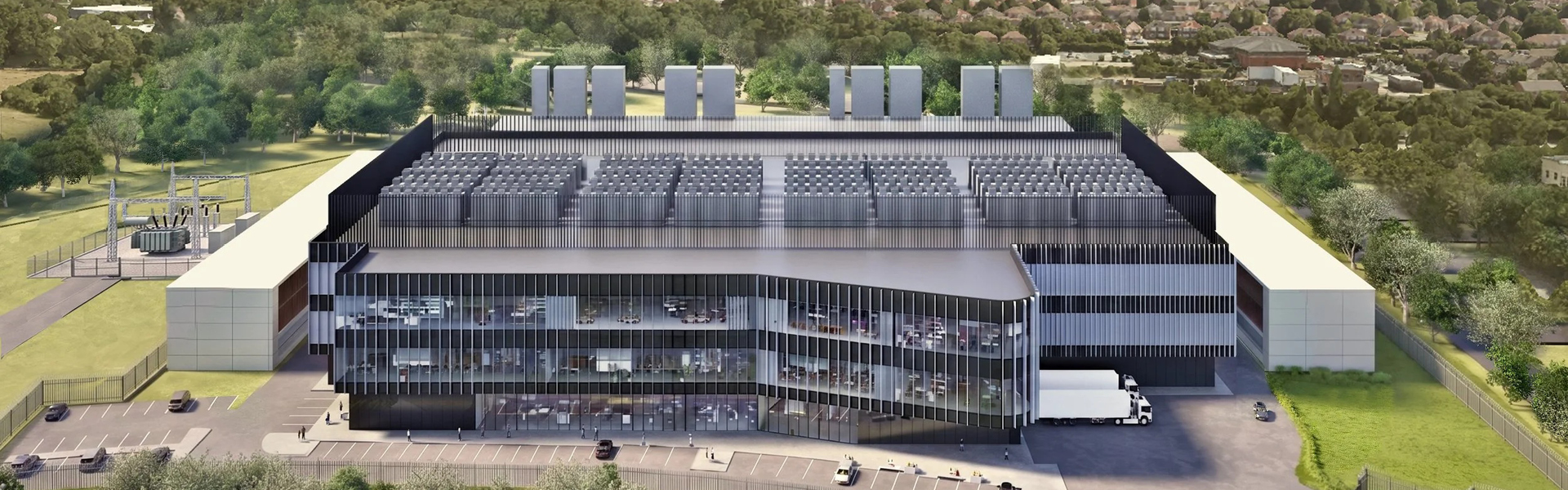
Power may dominate the data centre conversation, but it is only one part of making a site deliverable. England’s draft National Policy Statement reinforces the case for bringing planning, infrastructure, environment and community considerations together much earlier.
England’s draft National Policy Statement (NPS) for Data Centres is positive news for the sector. It gives data centres clearer national policy support and recognises their importance to the country’s digital infrastructure and economic growth.
For developers, investors and operators, that should increase the prospects of bringing forward the right schemes in the right locations. The projects most likely to succeed will be those that can demonstrate that the site, infrastructure and environmental strategy work together from the outset.
Data centre conversations often start with power: how much is available or how many megawatts can we fit onto this site. But while power is fundamental, on its own it does not make a site deliverable. To make a credible planning case, any proposals must also respond to constraints on water and electricity networks, environmental effects, infrastructure resilience, design quality and the implications for neighbouring communities.
Published on 28th October 2026, the draft NPS sets out a proposed framework for development consent decisions under the Nationally Significant Infrastructure Project (NSIP) regime which is aimed at sites greater than 100 MW IT Load, however smaller schemes may also be picked up under this policy. It remains subject to consultation, which closes on 8 January 2027.
The practical policy implication is that the case for development and the ability to deliver must be built together. Utility network constraints, environmental impact assessment, resilience and security; and design quality and local impacts remain fundamental.
The Challenge, and the Opportunity
The draft NPS provides both us and our clients the opportunity to build a stronger planning case through interdisciplinary thinking. These are not separate technical questions to be resolved in sequence or independently, they are connected development decisions.
A grid connection strategy influences phasing, substations, cable routes and land requirements. Alternative energy generation introduces further questions about emissions, noise, carbon, permitting and the planning boundaries. Those choices need to be understood before the layout is fixed, not an afterthought.
The same applies to cooling of the data centre. Electricity efficiency cannot be considered separately from water demand, heat rejection, plant noise and resilience. A solution that performs well against one measure can create pressure elsewhere. Understanding those trade-offs early can prevent a technically attractive concept from becoming a planning or operational problem later.
Energy performance also needs to be considered as an operational outcome, rather than simply a design assumption. Frameworks such as NABERS provide a way of benchmarking how data centres perform, including independently verified PUE, while a Design for Performance approach can help test energy assumptions and identify performance risks during design.
Building this thinking in early can help operators better understand and manage energy use, close the gap between predicted and actual performance, and demonstrate that efficiency commitments made through planning and design translate into measurable operational outcomes.
Heat reuse similarly needs to move beyond a general ambition towards a credible proposal. It requires a suitable demand, usable temperatures, viable infrastructure routes and a commercial arrangement that works for everyone involved. Without those fundamentals, heat reuse risks remaining a commitment that cannot ultimately be delivered.
Take a wider view of the site
Site selection therefore needs a wider lens. Power availability must be considered alongside water capacity, flood risk, ecology, air quality, noise, landscape, access and cumulative pressures on surrounding infrastructure. These constraints are also design inputs that should shape whether a site is viable, how the site is arranged and how much capacity it can really support.
Bringing these constraints into early optioneering will give investors and operators a clearer understanding of cost, programme and deliverability before significant commitment are made. It should also provide a stronger foundation for planning.
The draft NPS also places greater emphasis on local benefit. Employment, skills, supply-chain opportunities, infrastructure improvements and viable heat reuse proposals can all contribute to a stronger case, but engagement with local communities is key from the very start and the commitments must respond to local priorities and be capable of delivery. Wider national economic benefits will not remove the need to avoid or mitigate effects experienced locally.
Connected thinking from the outset
This is where connected thinking becomes valuable. Decisions about power, cooling, water, energy, noise and resilience all impact the masterplan. Environmental constraints such as biodiversity and the requirement for net gain affect land take and the layout. The community priorities influence mitigation, benefits and the overall planning narrative. So, resolving those interfaces early gives clients a better prospect of securing consent and avoids technical strategies being developed in isolation, creating a clearer route from site appraisal to delivery.
At Tyréns Hilson Moran we bring power, infrastructure, environment, energy, water, sustainability and design into the same development conversation. We help landowners, developers, investors and operators understand whether a site is genuinely deliverable before the major investment decisions are made and carried through to delivery.
The draft NPS gives the sector a more supportive starting point, but the advantage will go to clients who establish an interdisciplinary project team early, bringing together the right expertise to test site robustness and shape a strong, site-specific proposition from the outset.


