As cities balance the need for growth with increasingly ambitious environmental targets, planning has a critical role to play in bringing the two together. Andrew Moore reflects on his recent CVU presentation, and explores how a more collaborative, evidence-led approach to planning can help reduce carbon while supporting better urban development.
When it comes to tall buildings, planning and sustainability are often framed as competing interests. Environmental requirements can be perceived as barriers to development, while growing demand for office space, housing and infrastructure continues to place pressure on our cities.
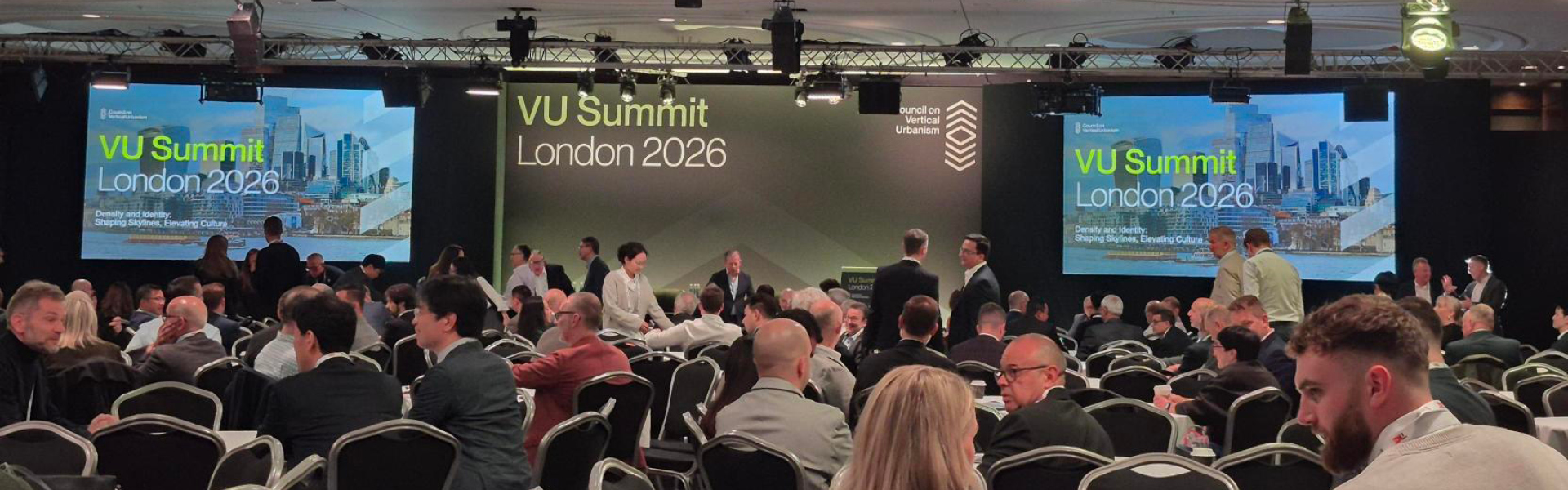
At this year’s Council on Vertical Urbanism Summit London, I presented ‘Tall Buildings, Planning, and the Environment’ alongside Kerstin Kane from the City of London. The presentation explored why the two don’t have to be at odds – what if planning and sustainability are not constraints on development, but the very tools and checks needed to deliver better urban growth for the long term?
The challenge facing cities
The City of London is one of the UK’s most important economic centres, generating more than £109 billion annually and supporting 1 in every 48 UK jobs. With demand for commercial space continuing to grow, future development remains critical to maintaining the City’s competitiveness and supporting wider economic growth.
At the same time, cities face increasing pressures from climate change, resource scarcity and the need to create healthy, resilient and attractive places for people to live and work. The question becomes how it can happen more sustainably.
Moving beyond a simple ‘build or don’t build’ debate
Planning is often viewed as a process of approval or refusal. In reality, effective planning is about balancing multiple priorities and helping to identify the best outcome for a particular site and community.
That means considering everything from carbon and biodiversity to land use, transport and economic value. Rather than addressing individual issues in isolation, planners increasingly need to take a whole-systems approach that recognises how these factors interact.
Why Retrofit First is changing the conversation
One of the most significant shifts in recent years has been the emergence of carbon-led considerations within planning decision-making. This has happened at pace.
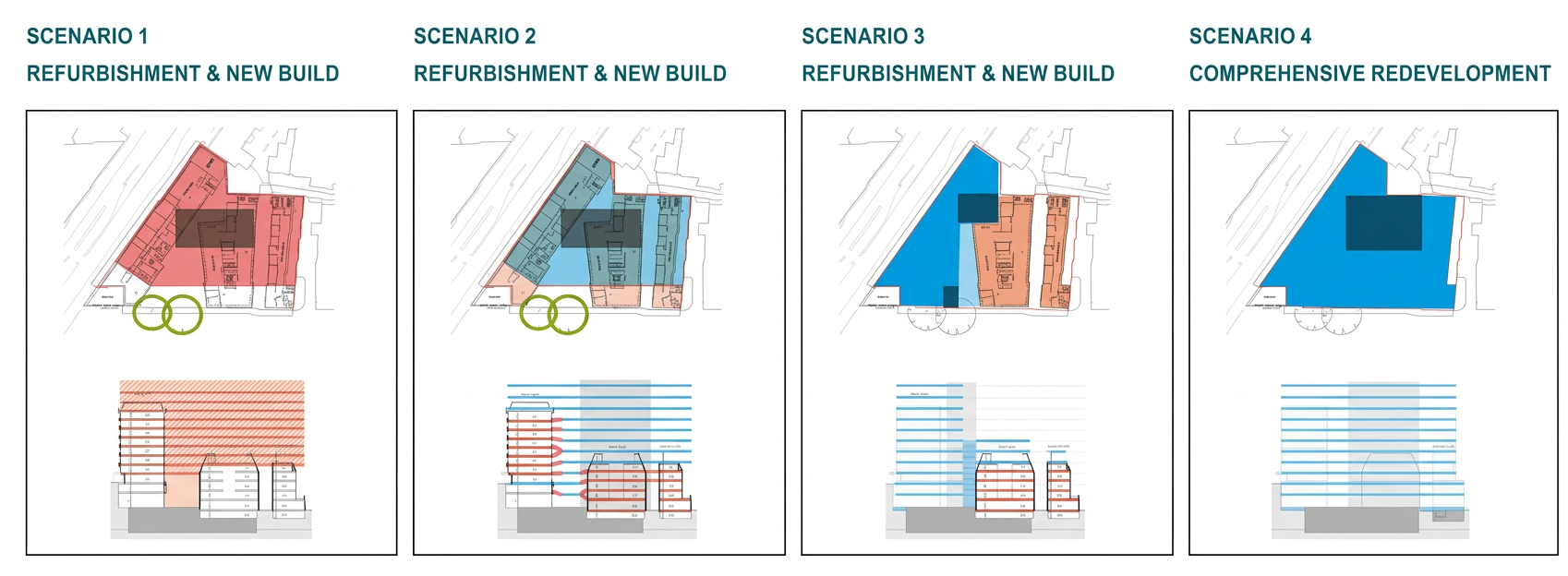
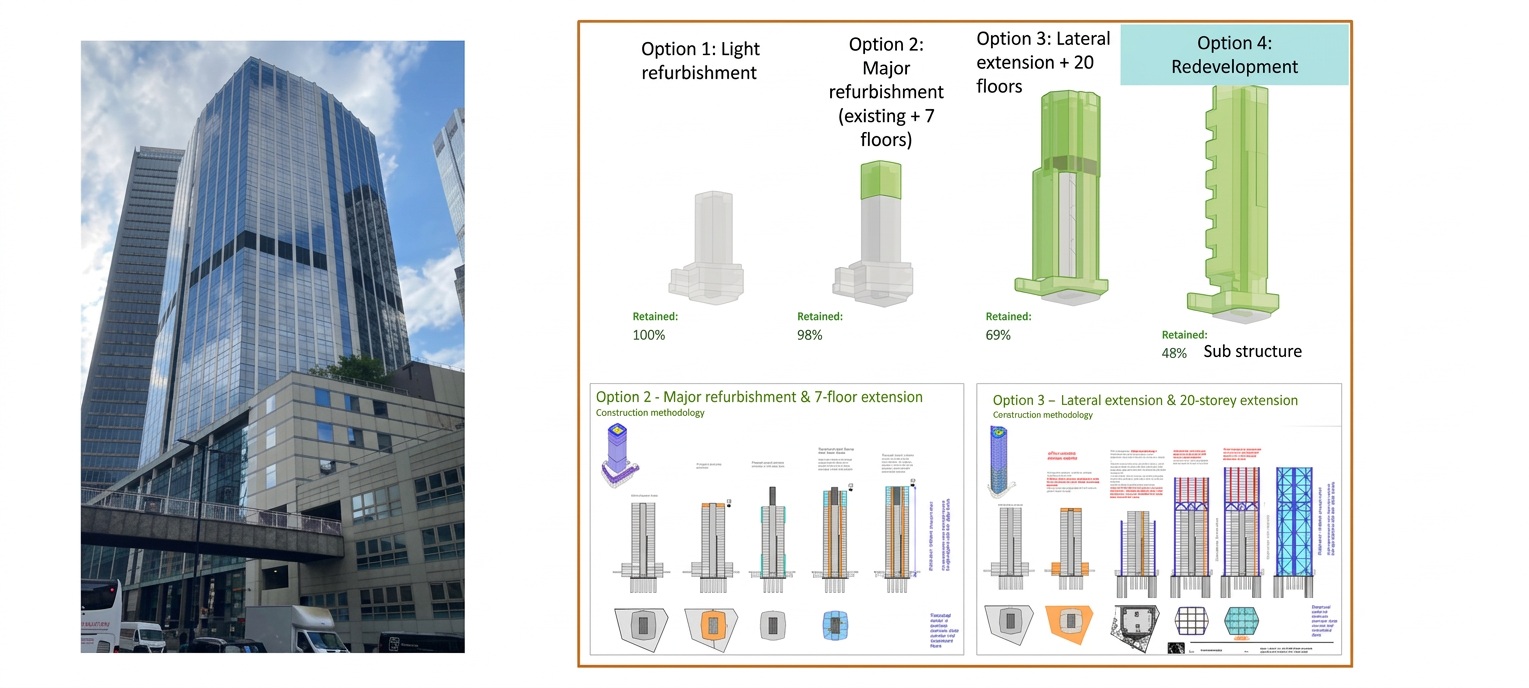
The City of London’s Retrofit First policy encourages project teams to explore multiple development options before committing to a preferred solution. Through carbon optioneering, planners, developers and design teams can compare refurbishment, extension and redevelopment scenarios, enabling decisions to be based on consistent, independently reviewed evidence rather than poor-quality assumptions.
The foundation to this approach was 14–21 Holborn Viaduct, a large office development in the City of London. At the time, planners were asking for different options for the existing buildings on the site to be considered in terms of their whole-life carbon impacts.
There was no established guidance or methodology for doing this. Fortunately, our client, Royal London Asset Management (RLAM), supported our transparent approach, allowing us to look holistically at the site and assess the different options on a consistent basis which went on to form the City of London’s Carbon Options Guidance.
The results demonstrated an important point. With consistent assumptions, the new-build option had a higher carbon impact. However, it also offered greater opportunities for site maximisation, long-term performance and future adaptability. We have also worked hard as a team to mitigate the impact of the new building. Consistency is key.
These distinctions are important. Carbon should be a significant consideration in planning, but it exists alongside a much broader set of factors that determine what represents the right outcome for a site. The carbon impact as built is also critical.
Our openness around the results helped start a wider conversation about how these options could be assessed more consistently. The guidance has now been in place for several years, with its latest update taking place in December 2025.