
The Vision
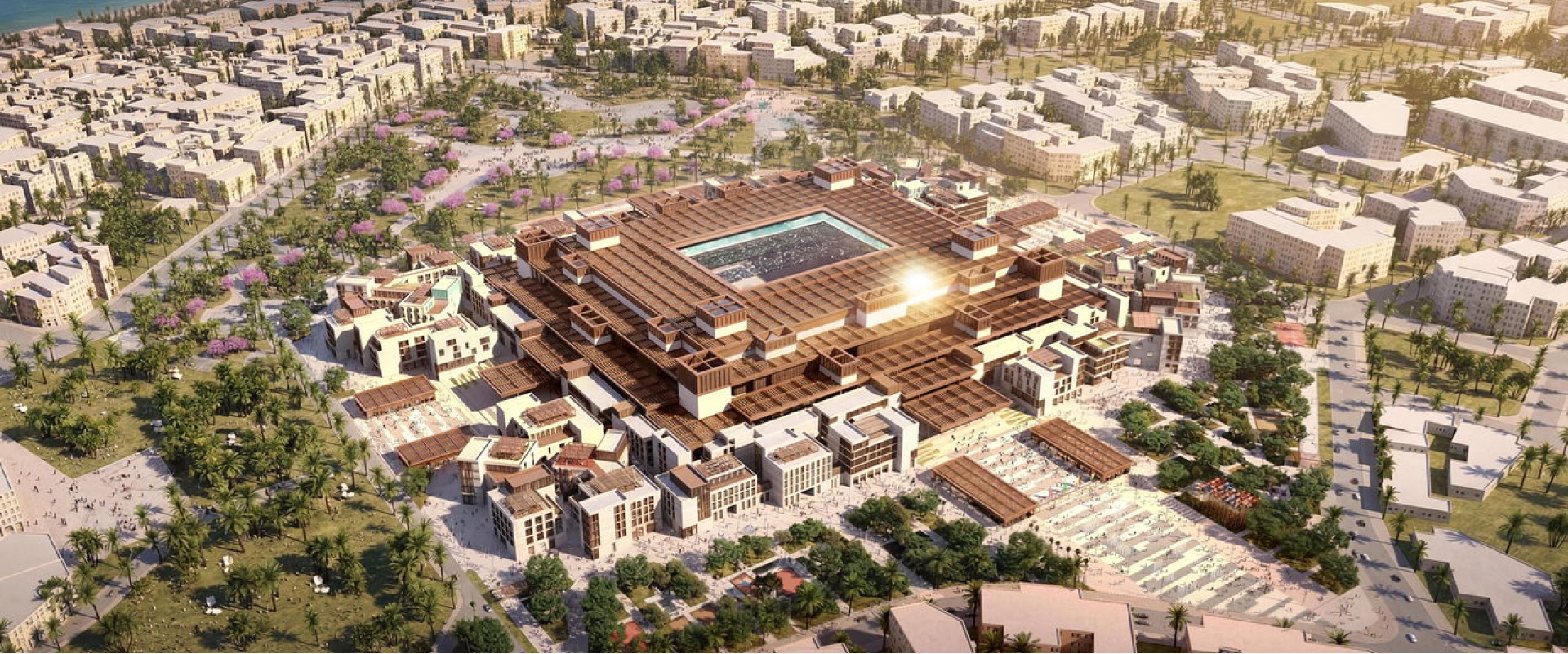
Part of the transformative $20 billion Jeddah Central masterplan, Jeddah Central Development Stadium has been conceived as a world-class sporting destination and year-round community hub. Designed to meet FIFA World Cup and AFC competition requirements, the 46,000-seat venue has been selected to host matches during the 2034 FIFA World Cup while serving as a destination for sport, culture and community activity throughout the year.
Drawing inspiration from the historic urban character of Al Balad, the development reinterprets the stadium as a connected urban district. Integrated within a wider mixed-use destination comprising four distinct villages focused on retail, health and education, fan experiences, and leisure, the design is organised around a network of shaded streets, public spaces and community amenities that animate the stadium beyond matchdays and foster a strong sense of place.
Our Contribution
Tyréns Hilson Moran provided an interdisciplinary design service spanning building services engineering, acoustics, sustainability, transport planning and mobility, and security consultancy. Our teams worked collaboratively to support the delivery of a technically sophisticated stadium capable of hosting international sporting events while enhancing visitor experience and operational performance.
Our acoustics specialists led laboratory testing programmes to inform material selection and the design of the stadium’s distinctive Roshan ceiling, while also assessing noise impacts on the surrounding masterplan. The building services and sports lighting design teams developed solutions tailored to the requirements of an elite sporting venue, incorporating resilient systems designed to perform in the demanding climate conditions of Saudi Arabia. Advanced environmental modelling informed strategies for outdoor comfort throughout the development, helping shape both the stadium concourse and surrounding public realm.
Design for People
Creating an exceptional fan experience was a fundamental driver of the design. The stadium’s seating bowl, sightlines and spectator amenities have been carefully considered to maximise comfort and engagement for supporters, players, officials, media and operators alike.
Beyond the stadium, the development has been designed to encourage year-round activity and social interaction. Retail, hospitality, wellness, education and leisure facilities are integrated throughout the surrounding villages, creating a destination that serves both visitors and the local community. A network of shaded streets, squares and public spaces connects the stadium to the wider development, encouraging movement and activity throughout the site.
To support comfortable movement across the masterplan, the design introduces a carefully considered ‘thermal journey’, ensuring visitors experience consistent levels of outdoor comfort as they move between public spaces, concourses and facilities. Low-velocity cooling systems support thermal comfort within the stadium, while environmental studies helped optimise conditions across the wider development.
Design for Planet
Sustainability has been embedded within the stadium design through a combination of passive and active environmental strategies. Climate-responsive architectural features maximise shading and support natural air movement, complementing active building systems to improve comfort and reduce energy demand. Photovoltaic panels integrated into the stadium roof contribute to on-site renewable energy generation, while energy-efficient sports lighting systems provide flexible operation for different event types and help reduce overall energy consumption.
Environmental modelling played a key role in shaping the public realm, informing design initiatives that improve pedestrian thermal comfort and encourage greater use of outdoor spaces throughout the year. The project also considered the impact of stadium operations on the wider environment, including assessments of noise emissions and mitigation measures to support a high-quality setting for surrounding developments. Together, these measures help create a resilient and environmentally responsive destination designed for long-term performance.


